


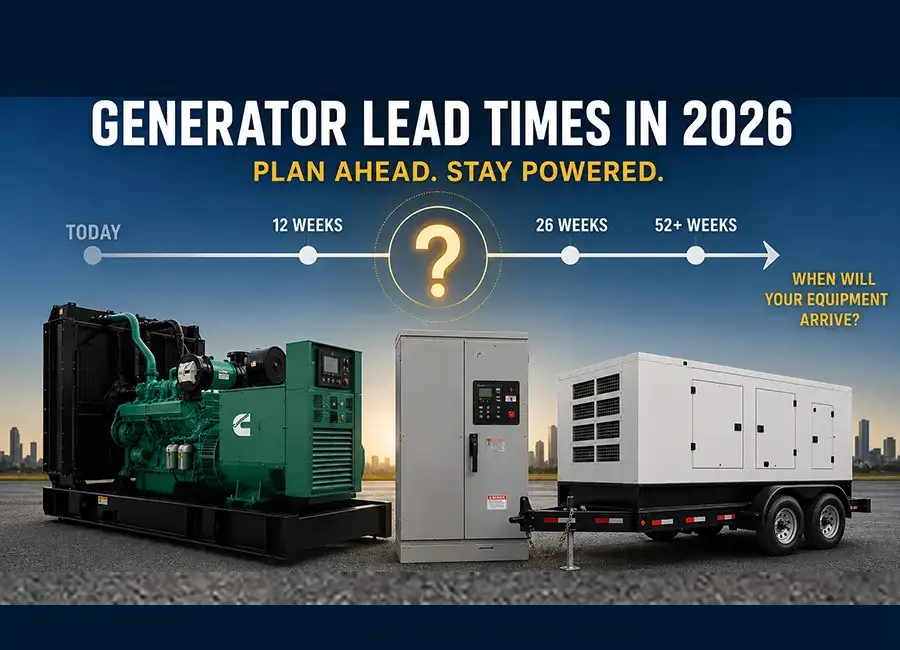

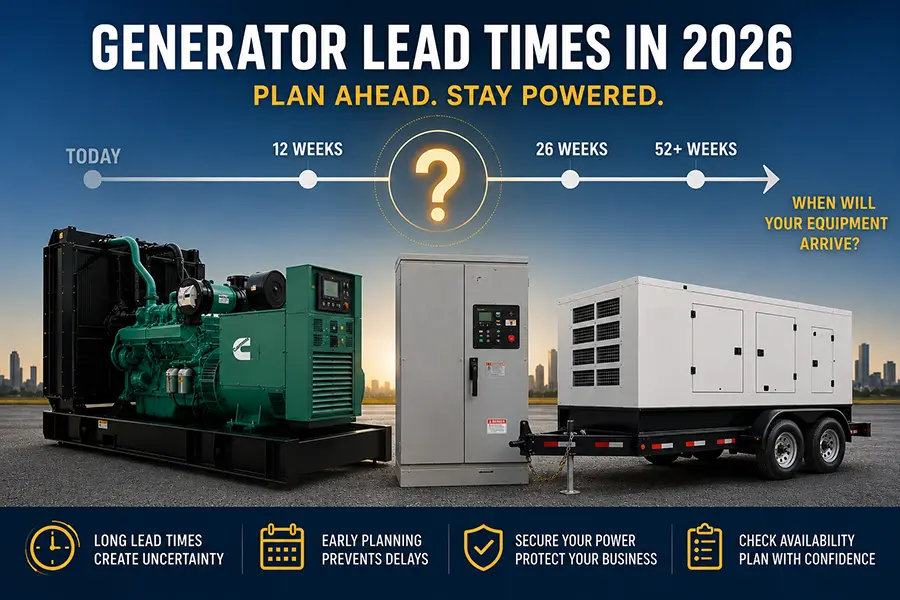
Over the past several years, generator lead times have been heavily influenced by global supply chain disruptions, component shortages, and shifting demand across critical industries. In 2026, the market has stabilized in some areas, but long lead times remain a reality for many generator and power system configurations.
For facility managers, engineers, and procurement teams, understanding how long it takes to get a generator in 2026 is essential for planning projects, avoiding downtime risk, and securing critical infrastructure on schedule.
What’s Changed Since the Supply Chain Disruptions
Compared to the peak disruption period during the Covid-era, the generator supply chain in 2026 shows signs of improvement, but not a full return to pre-2020 timelines.
Key changes include:
- More predictable production schedules from major manufacturers
- Continued long lead times for larger kW units and custom configurations
- Ongoing constraints on certain components such as engines, alternators, and switchgear
- Increased demand from data centers, healthcare, and industrial sectors
Even with improved consistency, lead times are still extended enough that proactive planning is critical. Sourcing backup power equipment remains a strategic decision, not a last-minute purchase.
Current Generator Lead Times (2026)
Based on current project data across major manufacturers including Cummins, MTU, Kohler, Hipower, and Mesa Solutions, the following lead times reflect what buyers should expect today when ordering a new generator.
25 kW – 400 kW Standby Diesel Generators: 12 to 26 weeks
500 kW – 600 kW Standby Diesel Generators: 12 to 30 weeks
750 kW – 1000 kW Standby Diesel Generators: 12 to 39 weeks
1250 kW – 3250 kW Standby Diesel Generators: 52 to 70 weeks
35 kW – 1000 kW Mobile Diesel Generators: 12 to 39 weeks
70 kW – 500 kW Natural Gas Generators: 26 to 39 weeks depending on configuration
As a general rule, larger generators have significantly longer lead times, especially for custom or mission-critical applications. There are exceptions and some significant variations to these lead times based on manufacturer, configuration, and generator size. To get the latest lead time information, it’s always best to check current availability with us on your specific requirement. Depending on your project timeline, we can recommend the manufacturer with the shortest current lead times, we also maintain a large inventory of new, surplus, and used generators as another option to get you powered up as quickly as possible.
Explore diesel and natural gas generator options:
Automatic Transfer Switch (ATS) Lead Times
Automatic Transfer Switches are a critical component of any backup power system. Lead times vary significantly by amperage:
250A – 400A: 7 weeks
600A: 10 weeks
800A – 1600A: 14 weeks
2000A: 20 weeks
3000A: 23 weeks
4000A: 31 weeks
Even though ATS lead times are shorter than generators, they can still become a bottleneck if not planned alongside generator procurement. We maintain an in-stock inventory of ATSs from 250A to 4000A, so be sure to check with us on current availability. If we don’t have your size in stock, we usually have it on order and arriving soon and can shorten your lead time.
View automatic transfer switches (ATS):
Diesel Generator Delivery Time: What Impacts It and When to Order?
Understanding diesel generator delivery time requires looking beyond just the kW rating. Production backlogs, engineering requirements, and component availability all play a role. Custom enclosures, fuel tanks, controls, and emissions packages can add complexity, while manufacturer-specific constraints may further extend timelines.
Because of these variables, lead times should always be validated in real time during the quoting process rather than assumed based on past projects.
One of the most common planning mistakes is underestimating how early equipment needs to be ordered. In the current environment, organizations planning large or mission-critical installations should begin procurement discussions 12 to 18 months in advance.
This is especially important for data centers, healthcare facilities, and industrial operations where backup power is directly tied to uptime and compliance requirements. Waiting until construction is underway often introduces unnecessary risk.
How to Avoid Generator Lead Time Delays
To avoid generator lead time delays, organizations should take a proactive approach:
- Engage early with suppliers to confirm real-time availability
- Standardize specifications where possible to reduce customization delays
- Coordinate generator and ATS procurement together
- Consider alternative brands, as well as used or surplus options if timelines are critical
- Work with suppliers that maintain inventory
Supply chain challenges have not disappeared. They have simply become more predictable for those who plan ahead.
View generator solutions from leading manufacturers:
Plan Ahead to Stay on Schedule
Generator lead times in 2026 continue to require careful planning, especially for larger systems. While the supply chain has improved, extended production timelines remain a reality across much of the market.
What sets Global Power Supply apart is a proactive approach to inventory. Generators and automatic transfer switches are ordered in advance to maintain a wide selection of in-stock equipment. This allows our customers to secure power solutions for immediate needs or significantly reduce lead times compared to standard factory orders.
With access to inventory across multiple manufacturers and configurations, it becomes possible to keep projects moving even when production schedules are extended. Strong supplier relationships and forward planning help ensure equipment is available when it matters most.
Don’t get caught out. Please contact us to check current availability or request a lead-time quote to align your project with real-world delivery timelines.