


Reliable power is essential to commercial building operations. HVAC systems, elevators, fire and life-safety systems, security equipment, access controls, refrigeration, communications infrastructure, and other critical loads may all depend on a stable electrical supply.
When utility power is interrupted, the impact can extend well beyond inconvenience. An outage can disrupt operations, reduce productivity, affect critical building systems, and create significant operational and financial risk.
Selecting the right backup generator for a commercial building requires more than choosing a generator with an adequate kilowatt rating. Electrical loads, starting requirements, fuel availability, generator duty rating, transfer equipment, site conditions, runtime expectations, and permitting requirements all need to be considered.
Why Commercial Buildings Need Reliable Backup Power
Every commercial facility has a different tolerance for downtime. An office building may need to maintain life-safety systems, elevators, access controls, and essential building operations, while a manufacturing facility may have production equipment or processes that cannot be shut down without significant consequences.
A properly designed commercial backup generator system provides an alternate source of power when the normal electrical supply is unavailable. The objective is not necessarily to power everything in the building. Instead, the system should be designed around the loads required to maintain safety, essential operations, and business continuity.
Identifying Critical Electrical Loads
One of the first steps in backup power planning is determining which systems need to remain operational during an outage. Depending on the facility, critical loads may include:
- Elevators
- Fire and life-safety systems
- Security and access-control systems
- HVAC equipment
- Communications and IT infrastructure
- Refrigeration
- Pumps and mechanical equipment
- Industry-specific production or process loads
Requirements can vary significantly by application. A food and beverage facility, for example, may prioritize refrigeration and temperature-sensitive processes, while a data center has very different requirements for IT equipment, cooling, UPS systems, and supporting electrical infrastructure.
Identifying these loads early provides the foundation for generator sizing and system design.
Types of Commercial Generators
Commercial generators are available in different configurations and duty ratings. The appropriate solution depends on how the equipment will be used, where it will be installed, and how much power the facility requires.
Standby Generators
A standby generator is a permanently installed backup power source designed to provide power when the normal electrical supply is interrupted.
Commercial standby generators are commonly integrated with an Automatic Transfer Switch (ATS). When the normal source fails, the system can initiate generator startup and transfer designated electrical loads to generator power. When acceptable utility power returns, the ATS transfers those loads back to the normal source.
Mobile Generator Rentals
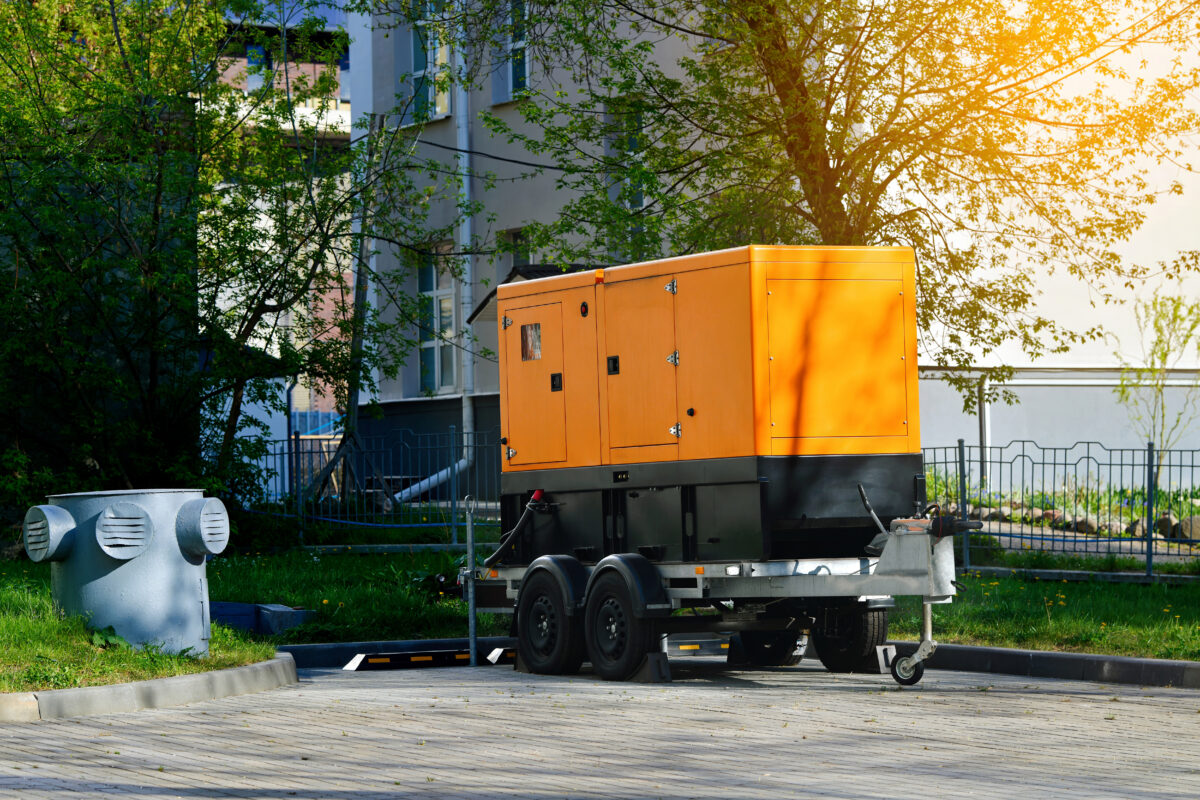
Mobile generators provide temporary power and can be deployed when additional generation capacity is required. Generator rentals can support planned maintenance, facility upgrades, construction projects, equipment replacement, temporary capacity requirements, and emergency situations.
Temporary generators can also help maintain critical operations while permanent backup power equipment is being serviced, upgraded, or replaced.
Industrial Generators for Large-Scale Operations
Large commercial and industrial facilities can require substantially more generation capacity than smaller buildings. Depending on the electrical load and system design, these applications may require a large individual generator or multiple generators operating as part of an integrated system.
Accurate load analysis and system design become increasingly important as facility power requirements increase.
Standby, Prime, and Continuous Generator Ratings
Generator ratings describe the operating conditions and duty cycle for which the equipment is designed.
Standby-rated generators are generally intended to provide backup power when the normal power source is unavailable.
Prime-rated generators are designed for applications requiring extended operation with varying electrical loads, subject to manufacturer operating specifications.
Continuous-rated generators are intended for sustained operation at a defined load level, subject to manufacturer specifications and rating criteria.
The generator’s rating should match the intended application as well as the facility’s electrical requirements.
How to Size a Commercial Backup Generator
Proper generator sizing is one of the most important aspects of backup power planning. Generator capacity should be based on the electrical loads the system will actually support.
A sizing analysis should account for factors such as:
- Running load
- Motor starting requirements
- Voltage and frequency requirements
- Future capacity requirements
- Environmental and site conditions
A generator application study or load analysis can help establish the appropriate generator capacity and configuration before equipment is selected.
This is particularly important for facilities with large motors, HVAC systems, pumps, refrigeration, data center equipment, or industrial processes. Two buildings of similar size can have dramatically different backup power requirements based on the equipment operating inside them.
Choosing the Right Generator Fuel Source
Fuel selection affects generator configuration, runtime planning, site requirements, maintenance, and long-term operation. Diesel and natural gas are common options for commercial backup generators.
Diesel Generators
Diesel generators are widely used for commercial and industrial backup power. Because diesel fuel can be stored on-site, facilities can establish fuel capacity based on desired runtime and operating requirements.
Important considerations include fuel tank capacity, consumption, fuel quality, refueling logistics, site constraints, and applicable permitting requirements.
Natural Gas Generators
Natural gas generators can connect to an available gas supply, reducing or eliminating the need for significant liquid-fuel storage on-site.
Natural gas is not automatically the right choice for every application. Available gas pressure and volume, utility infrastructure, generator capacity, site conditions, and project requirements all need to be considered.
Diesel vs. Natural Gas
There is no single best fuel source for every commercial building. The right choice depends on required runtime, load characteristics, fuel availability, site infrastructure, maintenance requirements, equipment availability, and overall project economics.
Evaluating these factors early helps ensure that fuel selection supports the performance and practical requirements of the overall backup power system.
Key Components of a Commercial Standby Power System
The generator is only one part of a complete commercial backup power system. Transfer equipment, controls, cooling, fuel systems, electrical distribution, and other infrastructure all contribute to system performance.
An Automatic Transfer Switch (ATS) monitors the normal power source and transfers designated loads to the generator when required. Once acceptable normal power has been restored, the system can transfer the load back.
The generator set, or genset, typically combines the engine, alternator, controls, and supporting systems required to produce electrical power. For diesel systems, a sub-base fuel tank may provide fuel storage directly beneath the generator. Generator enclosures can protect equipment from environmental exposure and may incorporate weather protection, sound attenuation, ventilation, and other site-specific requirements.
These components should be evaluated as an integrated system rather than selected independently.
Code, Permitting, and Site Considerations
Commercial generator installations can be subject to electrical codes, building and fire requirements, environmental regulations, permitting, and local authority requirements.
The National Electrical Code (NEC) addresses several classifications of backup power systems, including emergency systems under Article 700, legally required standby systems under Article 701, and optional standby systems under Article 702. The requirements that apply to a commercial generator installation depend on how the system and the loads it serves are classified, as well as the facility, electrical design, applicable codes, and requirements of the Authority Having Jurisdiction (AHJ).
Generator projects may also be subject to federal, state, and local air-quality and permitting requirements. Engine type, power rating, operating profile, fuel storage, and installation location can all affect project requirements.
Addressing these considerations early can help prevent equipment selection or permitting issues from delaying deployment.
How Global Power Supply Supports Commercial Backup Power Projects
Choosing the right backup generator is only one part of developing a reliable commercial power solution. Equipment sourcing, engineering, logistics, installation coordination, maintenance, and lifecycle planning can all affect the success of a project.
Global Power Supply provides vendor-neutral critical power infrastructure solutions for commercial and industrial organizations across the United States, helping customers deploy backup power based on their application, budget, and timeline.
Vendor-Neutral Generator Sourcing
We source new, used, and refurbished generators from leading manufacturers. A vendor-neutral approach provides greater flexibility when evaluating generator capacity, configuration, equipment availability, project schedule, and budget.
Generator Application Studies
A generator application study helps establish the electrical and operational requirements that should guide equipment selection. Evaluating facility loads before selecting equipment can reduce the risk of installing a generator that is incorrectly sized or configured for the application.
Generator Rentals
For temporary power requirements, we provide generator rentals for applications including planned outages, facility upgrades, construction projects, equipment replacement, and emergency power needs.
Rental equipment can also provide temporary capacity while permanent critical power infrastructure is being repaired, upgraded, or replaced.
Turnkey Project and Lifecycle Support
We support critical power projects with engineering solutions, project management, logistics coordination, installation management, rentals, preventive maintenance, and decommissioning and asset recovery.
This integrated approach helps our customers reduce procurement complexity and maintain continuity from initial equipment planning through long-term lifecycle support.
Plan Your Commercial Backup Power System With Confidence
The right backup generator for a commercial building should be selected around the facility’s actual electrical loads, operating requirements, site conditions, fuel strategy, and long-term resilience objectives.
Whether you are replacing aging equipment, planning a new installation, expanding a facility, or evaluating generator rentals for temporary power, careful planning can reduce project risk and help ensure the backup power system is appropriate for the application.
Discuss your backup power requirements with Global Power Supply to identify the right solution for your facility.
FAQs About Choosing the Right Backup Generator
How Do I Choose the Right Backup Generator for My Commercial Building?
Start by identifying the electrical loads that must remain operational during an outage. Then evaluate running loads, motor starting requirements, generator rating, fuel source, runtime requirements, site conditions, and applicable project requirements. A generator application study can help establish these requirements before equipment is selected.
What Size Backup Generator Does a Commercial Building Need?
There is no standard generator size based solely on building type or square footage. The appropriate capacity depends on the specific electrical loads the generator must support, including normal operating demand and equipment startup requirements. A detailed load analysis provides a more reliable basis for generator sizing.
What Is the Difference Between a Standby Generator and a Mobile Generator for Commercial Use?
A standby generator is typically a permanently installed system designed to provide backup power when the normal electrical source is unavailable. A mobile generator provides temporary power for applications such as planned maintenance, construction, facility upgrades, equipment replacement, or emergency requirements.
Which Fuel Source, Diesel or Natural Gas, Is Best for a Commercial Backup Generator?
Neither fuel source is universally better. Diesel provides on-site fuel storage and is widely used for commercial and industrial backup power. Natural gas can reduce liquid-fuel storage requirements where adequate gas infrastructure is available. The best option depends on runtime, load characteristics, fuel availability, site infrastructure, maintenance requirements, and project economics.
What Are the Code and Permitting Considerations for Installing a Commercial Backup Generator?
Requirements vary by location, facility type, generator application, and system configuration. Considerations may include electrical codes, building and fire requirements, air-quality regulations, fuel storage requirements, local permitting, and requirements established by the Authority Having Jurisdiction. These requirements should be evaluated early in the planning process.