

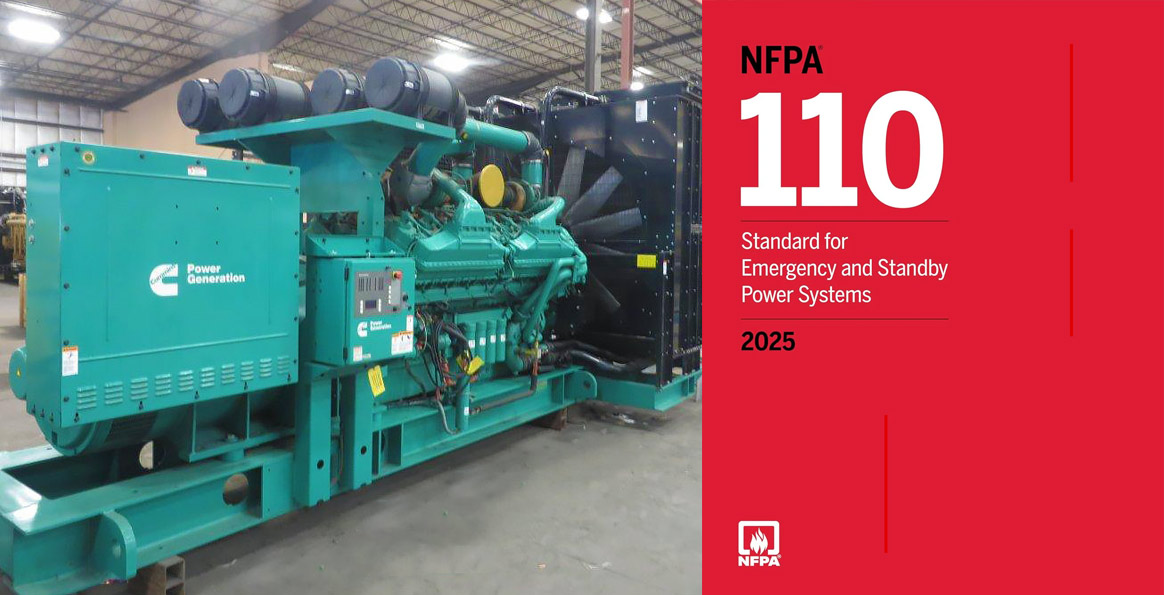
Critical facilities rely on backup power systems to protect operations, safeguard personnel, and maintain essential services during an outage. To ensure that emergency power performs properly when needed, many industries look to NFPA 110, the Standard for Emergency and Standby Power Systems. This widely referenced code establishes the performance criteria, maintenance expectations, and installation requirements for emergency power supply systems that support life safety and mission-critical loads.
Understanding NFPA 110 is essential for data centers, hospitals, industrial facilities, public buildings, telecom sites, and any commercial operation where code compliance and operational continuity are priorities. This overview explains what NFPA 110 covers, how it impacts diesel generator and UPS design, and what facility leaders should consider when planning upgrades or evaluating compliance.
What NFPA 110 Covers
NFPA 110 provides requirements for Emergency Power Supply Systems (EPSS). These systems include the full chain of backup power equipment: the generator, fuel system, transfer equipment, controls, monitoring, and environmental conditions required to support reliable operation.
NFPA 110 focuses on two primary areas:
1. Performance and reliability requirements for emergency power systems
2. Installation, testing, and maintenance expectations for equipment supporting life safety loads
While local jurisdictions adopt and enforce building codes, many reference NFPA 110 as the governing standard for emergency and legally required standby power systems.
Levels of EPSS: Level 1 and Level 2
NFPA 110 classifies systems into two categories based on the consequences of failure.
Level 1
A Level 1 system is used where a power failure could result in loss of life or significant safety hazards. Typical Level 1 applications include:
- Hospitals and healthcare facilities
- Fire protection systems
- Emergency egress lighting
- Critical life safety systems
Level 1 systems require tighter performance criteria, more stringent testing intervals, and faster transfer to emergency power.
Level 2
A Level 2 system supports loads where a power failure poses less severe risk. Examples include:
- Non-critical HVAC
- Select industrial processes
- General facility loads that are not life safety related
Level 2 systems follow the same general framework but have more flexible performance requirements. Selecting the appropriate level depends on local code and the facility’s risk profile.
NFPA 110 Classifications for Power System Performance
NFPA 110 also defines system classification based on how long the EPSS must operate during an outage. These classifications help determine generator sizing, fuel storage strategy, and system engineering.
Common classifications include:
- Class 2: Two hours of operation
- Class 4: Four hours of operation
- Class 8: Eight hours of operation
- Class 48: Forty-eight hours of operation
- Class X: A custom duration defined by the facility
Facilities must ensure adequate on-site fuel storage or secondary fuel supply arrangements that match their NFPA 110 classification.
The Importance of the 10 Second Requirement
A signature requirement of NFPA 110 is the expectation that Level 1 systems provide power within 10 seconds of a utility outage. This requirement influences:
- Generator sizing and load acceptance characteristics
- Transfer switch type and transfer timing
- Battery system readiness for engine start
- Fuel and air system design to ensure immediate response
Meeting this requirement is both an engineering and operational challenge. Systems must be designed to deliver sufficient cranking power, a reliable fuel supply, and fast load acceptance under emergency conditions.
Environmental and Installation Considerations
NFPA 110 requires that emergency power equipment be protected from environmental conditions that could impair performance. This includes:
- Temperature control in generator rooms
- Proper ventilation for combustion air and heat removal
- Protection against flooding or water intrusion
- Adequate clearances for maintenance and airflow
- Enclosure design for outdoor units
The location of the generator, fuel system, and transfer equipment must support both reliability and maintainability. NFPA 110 also outlines requirements for remote annunciation and system monitoring to ensure operators receive timely alerts.
Testing and Maintenance Requirements
Regular testing is essential under NFPA 110. Key requirements include:
- Generator testing at minimum load levels, testing is dependent on the after treatment of the generator along with the limited runtime given from the local Authority Having Jurisdiction (AHJ)
- Annual load bank testing if the facility load does not meet minimum thresholds
- Verification of start-up performance
- Fuel quality checks
- Maintenance well documented for compliance audits
Testing ensures that the generator, fuel system, batteries, and transfer switches are fully functional and able to perform under real emergency conditions.
Why NFPA 110 Matters for Facility Owners
NFPA 110 compliance is critical because it ensures:
- Reliable performance during emergencies
- Reduced risk of system failure
- Alignment with local code enforcement
- Protection for personnel and critical operations
- Stronger uptime posture for commercial and industrial sites
Facilities that overlook NFPA 110 may face compliance challenges, operational vulnerabilities, and increased downtime risk. It’s also worth noting, NFPA 110 sets the baseline, some AHJs enforce certain parts more heavily like annunciation, fuel storage, or the 10-second requirement while being flexible in others, this varies by location.
Support From Global Power Supply
Meeting NFPA 110 requirements requires the right equipment, proper engineering, and a maintenance strategy that ensures long-term readiness. Global Power Supply provides engineering services, system design support, and code-aligned backup power solutions that help commercial and industrial facilities comply with NFPA 110. Our team can evaluate your current emergency power system, identify gaps, and design a reliable solution tailored to your operational and regulatory needs. Every project is engineered for resilience and powered by experience to help keep your facility protected during critical events.