

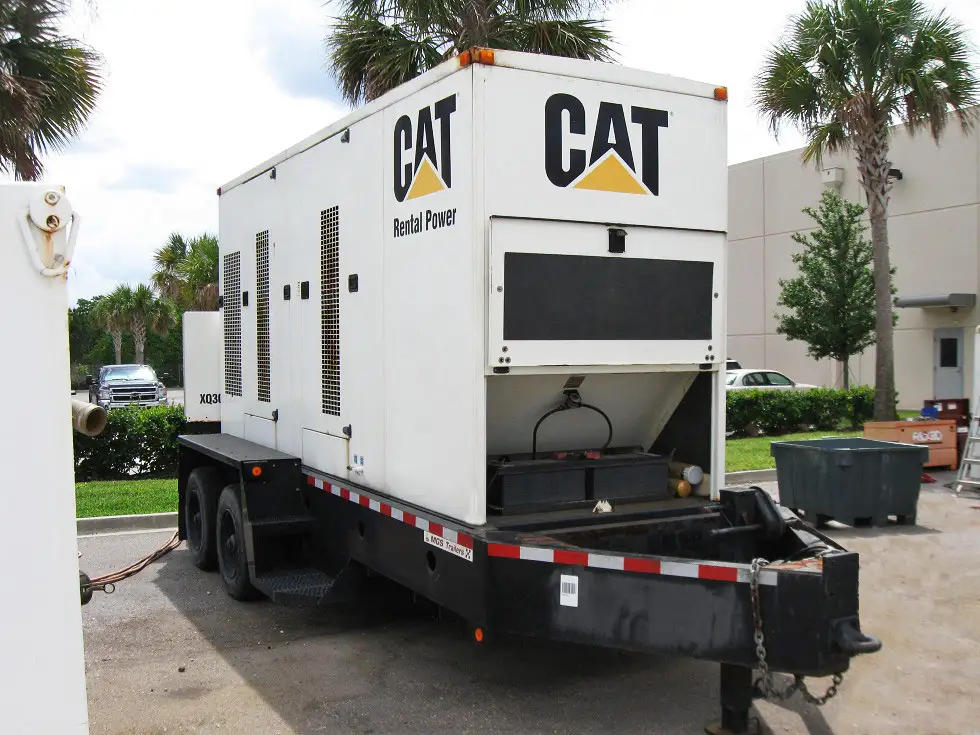
Whether you are planning a facility upgrade, supporting a construction project, preparing for scheduled maintenance, or responding to an unexpected power requirement, temporary power requires proper planning and coordination.
Industrial generator rentals provide a flexible way to secure the power you need without making a long-term equipment investment. The right rental solution, however, involves more than selecting a generator based on kW capacity. Electrical load, voltage, runtime, fuel requirements, site conditions, logistics, and supporting power distribution equipment all need to be considered.
Understanding these requirements early can help reduce project risk and ensure the temporary power system is properly matched to your application.
Why Rent an Industrial Generator?
For temporary or project-specific power requirements, renting can provide greater flexibility than purchasing and maintaining equipment that may only be needed for a limited period.
Industrial generator rentals are commonly used for:
- Construction sites and remote jobsites
- Planned facility maintenance
- Electrical system upgrades
- Planned shutdowns
- Temporary capacity requirements
- Equipment replacement projects
- Emergency and unplanned power needs
Renting also allows equipment to be selected for the specific requirements of each project. Rather than relying on an existing generator that may not be ideally suited to the application, customers can evaluate capacity, voltage, fuel type, configuration, mobility, and runtime requirements for the project at hand.
Industrial Generator Rental Options
Generator rentals are available in a range of configurations. The appropriate equipment depends on the application, electrical requirements, operating environment, and expected duration of use.
Diesel Generator Rentals
Diesel generators are widely used for commercial and industrial temporary power applications. They are available across a broad range of capacities and can support everything from construction loads to critical facility infrastructure.
Fuel planning is an important consideration. Expected electrical load, operating hours, tank capacity, refueling access, and fuel delivery schedules should be evaluated before deployment.
Natural Gas Generator Rentals
Natural gas generators may be appropriate when suitable gas infrastructure is available. Depending on the application, connecting to an existing fuel source can reduce the need for on-site diesel storage and scheduled refueling.
Available gas pressure and volume, generator requirements, site infrastructure, and operating profile should all be reviewed before selecting a natural gas rental generator.
Trailer-Mounted and Sound-Attenuated Generators
Trailer-mounted and towable generator rentals provide mobility for construction sites, remote projects, and temporary applications where equipment may need to be relocated.
For hospitals, campuses, occupied facilities, residential areas, and other noise-sensitive environments, sound-attenuated generator enclosures can help reduce operating noise. Site access, equipment placement, cable routing, service clearance, and noise requirements should all be considered during planning.
How to Size an Industrial Generator Rental
Correct generator sizing is one of the most important parts of temporary power planning. Adding up equipment nameplate ratings alone may not provide an accurate picture of the generator capacity required.
A proper evaluation should consider factors such as:
- Running and peak electrical loads
- Motor starting requirements
- Voltage and phase
- Expected operating hours
- Changes in load during the project
Bigger is not necessarily better. An oversized generator can introduce operational inefficiencies, while an undersized unit may not reliably support the required loads. Depending on the application, multiple generators may also provide greater flexibility than one large unit.
For complex industrial or mission-critical applications, load analysis can help determine the appropriate generator capacity and system configuration before rental equipment is deployed.
Generator Rentals for Commercial and Industrial Applications
Temporary power requirements vary significantly by industry. Understanding how a facility operates is essential to developing an appropriate rental power strategy.
Construction and Remote Jobsites
Generator rentals for construction sites can support temporary offices, lighting, pumps, tools, HVAC equipment, and other loads before permanent utility infrastructure is available. Mobile equipment can also provide flexibility as the project progresses and power requirements change.
Manufacturing and Industrial Facilities
Manufacturing facilities may require temporary generators during planned maintenance, electrical upgrades, facility expansions, or equipment replacement projects. Motor starting loads, production schedules, and changing electrical demand can make proper sizing and power distribution especially important.
Oil and Gas Operations
Oil and gas operations may require temporary power in remote locations where utility service is unavailable or insufficient. Rental generators can support pumps, field equipment, lighting, communications, and other operational loads. Fuel availability, mobility, site conditions, and runtime are important considerations.
Healthcare Facilities and Data Centers
Healthcare facilities and data centers depend on critical power infrastructure where outages or infrastructure work require careful coordination.
Rental generators can support planned maintenance, facility upgrades, equipment replacement, and temporary capacity requirements. Depending on the project, the temporary power solution may also require UPS systems, transformers, switchgear, power distribution equipment, or other supporting infrastructure.
Supporting Equipment for Generator Rentals
A generator is often only one part of a complete temporary power system. Supporting equipment should be evaluated alongside the generator rather than after the equipment arrives on site.
Depending on the application, a temporary power system may include:
- Fuel tanks and fuel-management support
- Cables and temporary power distribution
- Distribution panels
- Transformers
- Switchgear
- Transfer equipment
- Load banks
Fuel planning is particularly important for extended diesel generator operation. Generator size, expected load, runtime, tank capacity, refueling access, and delivery schedules all affect the overall temporary power strategy.
Transformers and distribution equipment may also be required to match generator output with facility voltage and safely distribute power to connected loads.
What to Look for in an Industrial Generator Rental Provider
Selecting the right equipment is important, but so is selecting a provider capable of supporting the entire project.
For commercial and industrial generator rentals, consider the provider’s technical expertise, equipment availability, logistics capabilities, geographic coverage, and experience coordinating supporting power infrastructure.
For complex projects, a rental provider should be able to help address questions beyond generator capacity. How will equipment reach the site? Where will it be positioned? How will power be distributed? Does the voltage match the facility? What supporting equipment is required? How will fuel be managed?
Addressing these questions early can simplify deployment and reduce the potential for delays once the project begins.
Plan Your Temporary Power Project
Global Power Supply helps organizations evaluate key requirements and source temporary power solutions ranging from individual commercial rental generators to more complex critical power deployments.
For more complex temporary power projects, we can also coordinate related critical power equipment and services, including engineering support, project management, logistics, installation coordination, UPS systems, power distribution equipment, transformers, and other infrastructure.
This integrated approach helps our customers reduce procurement complexity while coordinating temporary power requirements through a single project team.
Discuss your temporary power requirements with our team to evaluate equipment availability and the appropriate solution for your project.
Frequently Asked Questions About Industrial Generator Rentals
What Are the Benefits of Renting an Industrial Generator Instead of Buying One?
Renting provides flexibility when power is needed for a defined project, planned outage, facility upgrade, or temporary application. It can reduce the need for a significant capital purchase as well as the long-term responsibilities associated with storing, maintaining, transporting, and eventually replacing owned equipment.
Renting also allows you to select generator capacity and configuration based on the requirements of each project.
What kW Capacities Are Available for Industrial Generator Rentals?
Industrial generator rentals are available across a broad range of capacities, from smaller mobile units to large generators for demanding commercial and industrial loads.
The appropriate capacity depends on your actual electrical requirements. Generator sizing should consider running loads, starting loads, voltage, phase, operating profile, and potential changes in demand.
What Should I Look for in an Industrial Generator Rental Provider?
Consider equipment availability, technical expertise, logistics capabilities, geographic coverage, supporting equipment, and project coordination.
For complex temporary power applications, it is also valuable to work with a provider that understands the complete power system, including generators, transformers, power distribution, switchgear, transfer equipment, and fuel requirements.
How Much Fuel Does a Diesel Rental Generator Use?
Fuel consumption depends on generator size, engine characteristics, electrical load, and operating hours. The same generator will generally consume more fuel when operating under a heavier electrical load.
Fuel planning should therefore be based on the specific generator and anticipated operating profile. Global Power Supply also provides a generator fuel consumption calculator for preliminary planning.
What Size Rental Generator Do I Need?
Start by identifying all electrical loads the generator must support, including equipment with significant starting requirements such as motors, pumps, compressors, and HVAC systems.
Voltage, phase, load sequencing, operating hours, and expected changes in demand should also be evaluated. For more complex applications, load analysis can help determine the appropriate generator capacity and system configuration.