

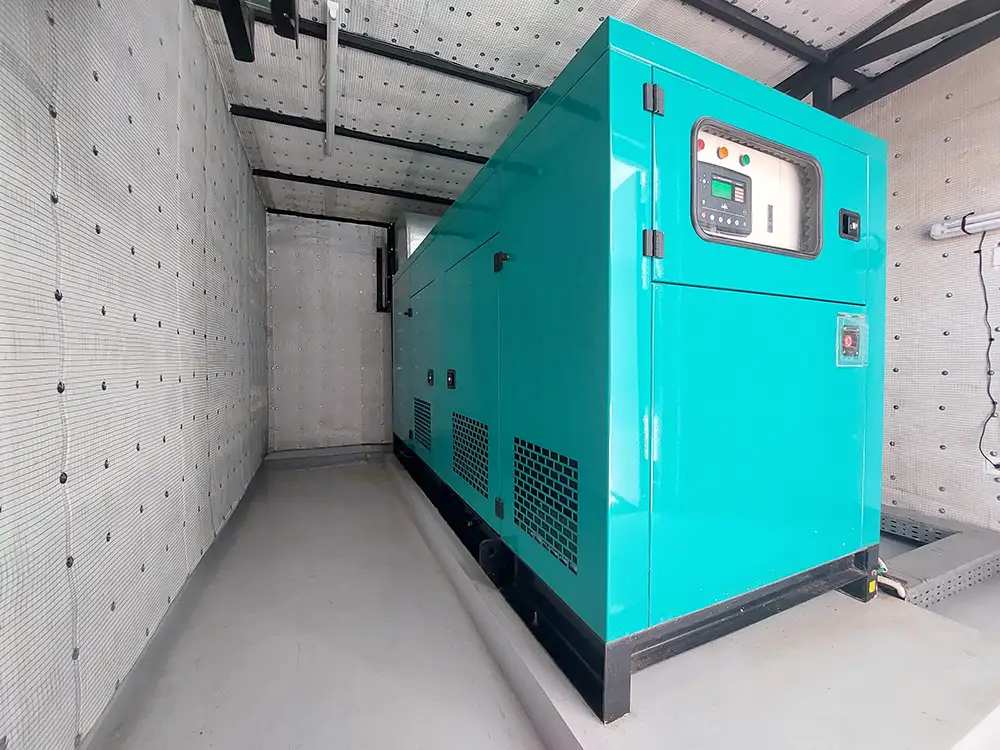
What It Is, How It Defines Generator Noise, and How to Stay Compliant
Backup power systems are essential for maintaining operational continuity, but they introduce a critical design challenge: noise. In urban environments, healthcare facilities, data centers, and commercial buildings, generator sound levels are not just a comfort issue. They are often regulated, measured, and enforced.
ISO 8525 provides one of the most widely recognized international frameworks for defining and measuring generator performance, including acoustic characteristics. Understanding how it applies to real-world installations is key to designing compliant and effective backup power systems.
What Is ISO 8525?
ISO 8525 is an international standard that defines performance requirements, testing methods, and ratings for engine-driven generator sets. It is divided into multiple parts, each addressing a specific aspect of generator operation such as power ratings, fuel consumption, and environmental considerations.
Noise is primarily addressed in:
- ISO 8525-10: Measurement of airborne noise by the enveloping surface method
- ISO 8525-1: Application, ratings, and performance (includes operating conditions that affect noise)
These standards establish consistent, repeatable methods for measuring generator noise output, ensuring that manufacturers and engineers are working from the same baseline when comparing equipment.
How ISO 8525 Defines Generator Noise Standards
ISO 8525 does not set universal maximum noise limits. Instead, it defines how noise should be measured and reported. This distinction is important.
The standard focuses on:
- Sound power level (LwA): The total acoustic energy emitted by the generator
- Sound pressure level (LpA): The noise experienced at a specific distance from the generator
- Test conditions: Load level, environment, and measurement geometry
By standardizing these factors, ISO 8525 ensures that:
- Noise data from different manufacturers is comparable
- Measurements are not influenced by inconsistent test setups
- Engineers can accurately predict real-world performance
How Generator Noise Is Measured
ISO 8525-10 specifies a structured approach to acoustic testing. Key elements include:
1. Measurement Environment
- Testing is typically conducted in a free-field environment over a reflective plane
- This minimizes reflections and external interference
2. Measurement Surface
- Microphones are placed around an imaginary envelope surrounding the generator
- This envelope can be rectangular, cylindrical, or hemispherical depending on the setup
3. Distance and Positioning
- Common measurement distances include 1 meter or 7 meters (3.28 feet or 23 feet) from the generator
- Multiple measurement points are averaged to determine overall sound levels
4. Operating Conditions
- Generators are typically tested at rated load
- Noise varies significantly between idle and full load conditions
5. Units of Measurement
- Results are expressed in decibels (dB), often A-weighted (dBA) to reflect human hearing sensitivity
How Loud Is Too Loud?
ISO 8525 does not define what is “too loud.” That determination is made by:
- Local noise ordinances
- State and municipal regulations
- Zoning requirements
- Facility-specific design criteria
Typical benchmarks for context:
- 60 to 70 dBA: Normal conversation
- 70 to 85 dBA: Busy street traffic
- 85+ dBA: Threshold where prolonged exposure may require hearing protection
In many jurisdictions:
- Daytime limits may range from 65 to 75 dBA at the property line
- Nighttime limits are often stricter, sometimes 50 to 60 dBA or lower
For critical facilities in dense urban environments, acceptable noise levels may be significantly lower, especially near residential zones, hospitals, or office buildings.
Why Noise Regulations Vary by Location
Noise compliance is highly localized. Requirements can vary based on:
- City ordinances and enforcement practices
- Proximity to residential or mixed-use developments
- Time-of-day restrictions
- Environmental impact studies
- Building and permitting requirements
For example:
- A generator installation in a remote industrial site may have minimal restrictions
- The same system in a downtown metropolitan area may require aggressive sound attenuation and detailed acoustic studies
This variability makes site-specific engineering essential.
Strategies to Reduce Generator Noise
Meeting noise requirements often requires a combination of equipment selection, enclosure design, and site planning.
1. Sound-Attenuated Enclosures
One of the most effective solutions is a sound-attenuated enclosure, which reduces noise at the source.
These enclosures are designed with:
- Acoustic insulation materials
- Airflow systems that minimize sound leakage
- Engineered intake and exhaust silencers
Custom enclosures can be tailored to meet specific dBA targets at defined distances. Many installations require hospital-grade or critical-grade silencers to meet strict urban limits.
Sound-attenuated enclosures are a standard part of many engineered power solutions, particularly in industries like oil and gas and data centers where environmental control is critical.
2. Exhaust Silencing Systems
Exhaust noise is a major contributor to overall sound levels.
Options include:
- Industrial silencers
- Residential-grade silencers
- Critical-grade silencers for maximum attenuation
Each level provides increasing noise reduction, often at the expense of higher backpressure, which must be accounted for in engine design.
3. Acoustic Barriers and Walls
Installing acoustic walls or barriers between the generator and sensitive areas can significantly reduce perceived noise.
Effectiveness depends on:
- Height and placement
- Material density
- Line-of-sight interruption
4. Equipment Placement and Orientation
Strategic placement can make a measurable difference:
Effectiveness depends on:
- Positioning exhaust outlets away from occupied areas
- Locating generators behind structures or natural barriers
- Increasing distance from property lines
Even small layout changes can reduce sound levels at critical measurement points.
5. Vibration Isolation
Structure-borne noise can travel through foundations and adjacent buildings.
Mitigation methods include:
- Isolation pads
- Spring mounts
- Flexible connections
6. Hybrid and Alternative Technologies
In some applications, hybrid generators incorporating a battery energy storage system (BESS) can reduce generator runtime, indirectly lowering noise exposure by limiting operation during sensitive periods.
Designing for Compliance from the Start
Noise compliance is most effectively addressed during the design and engineering phase, not after installation.
Key considerations include:
- Defining required dBA levels at property lines
- Reviewing local codes and permitting requirements
- Selecting equipment based on certified ISO 8525 data
- Conducting acoustic modeling when necessary
Retrofits are possible, but they are often more complex and costly than designing correctly from the outset.
Partnering with Experts in Noise-Compliant Power Systems
Designing backup power systems that meet ISO 8525 measurement standards and local noise regulations requires a detailed understanding of both equipment and environment.
Global Power Supply delivers engineered power solutions tailored to each application, including:
- Generator systems designed to meet site-specific sound requirements
- Custom sound-attenuated enclosures and acoustic treatments
- Full project support from design through installation and commissioning
- Nationwide experience navigating local noise regulations, including dense urban environments
With a vendor-neutral approach and deep engineering expertise, our customers receive solutions aligned with operational goals, compliance requirements, and long-term performance expectations.