

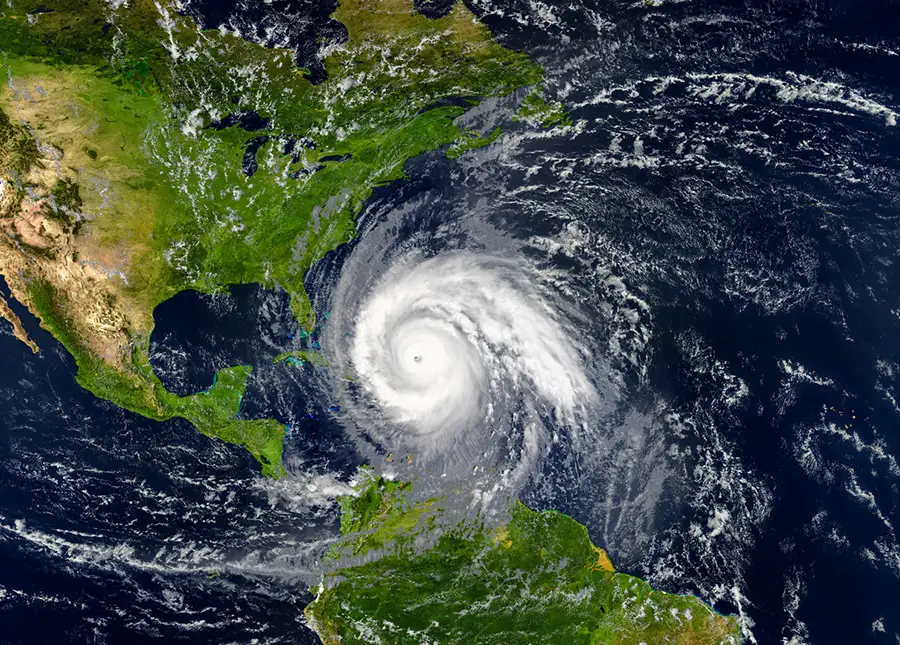
Satellite view of hurricane approaching the United States.
When a hurricane threatens a region, most organizations focus on preparing for potential wind and flood damage. However, for many businesses the most significant operational challenge is often the extended loss of utility power that can follow. These outages may last for days or even weeks after a major hurricane, impacting operations, critical infrastructure, employee productivity, customer service, and overall business continuity.
Effective hurricane preparedness for businesses requires more than monitoring weather forecasts and securing physical assets. It also requires a proactive strategy for maintaining power, protecting critical systems, and supporting operational continuity when utility service becomes unavailable.
The following seven steps can help facility leaders strengthen their hurricane backup power planning efforts and improve resilience before the next storm arrives.
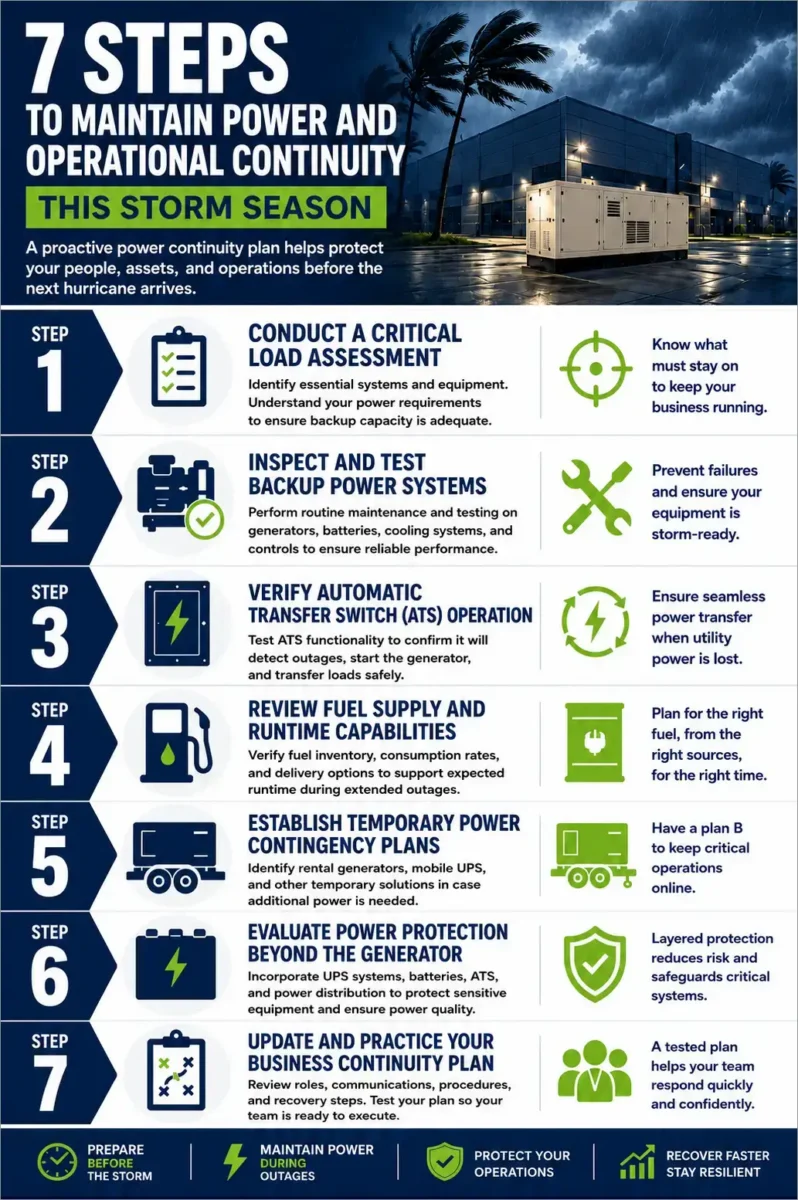
1. Conduct a Critical Load Assessment Before Hurricane Season
Effective emergency power planning begins with identifying the equipment and systems that must remain operational during a power outage. Reviewing your facility’s critical electrical loads helps determine whether your existing backup power system has sufficient capacity to support essential operations and highlights any gaps that should be addressed before hurricane season.
Learn more about comprehensive backup power equipment and infrastructure solutions:
https://www.globalpwr.com/solutions/
2. Inspect and Test Backup Power Systems
Routine maintenance and testing are essential to ensuring backup generators, batteries, and supporting equipment operate reliably during an outage. A preventive maintenance program should include inspections of major system components, load testing, battery testing, cooling systems, fuel systems, and controls to help identify potential issues before they become failures.
Preventive Maintenance Services:
https://www.globalpwr.com/services/preventive-maintenance/
Service Solutions:
https://www.globalpwr.com/services/
3. Verify Automatic Transfer Switch (ATS) Operation
An Automatic Transfer Switch (ATS) is responsible for detecting a utility power failure, starting the generator, and transferring electrical loads to emergency power. Regular testing helps confirm the transfer switch and generator operate together as intended and that critical systems receive power when utility service is interrupted.
Automatic Transfer Switch Solutions:
https://www.globalpwr.com/automatic-transfer-switches/
4. Review Fuel Supply and Runtime Capabilities
A backup generator is only as reliable as its available fuel supply. Before hurricane season, facilities should verify on-site fuel capacity, estimated runtime, fuel quality, and emergency delivery arrangements to ensure backup power can be maintained throughout an extended utility outage.
5. Establish Temporary Power Contingency Plans
Even well-maintained backup systems can be affected by equipment failures, storm damage, or changing operational requirements. Identifying temporary generator rentals, mobile UPS systems, or other emergency power solutions before a storm provides additional flexibility if existing equipment cannot meet operational needs.
Generator Rentals:
https://www.globalpwr.com/services/generator-rentals/
6. Evaluate Power Protection Beyond the Generator
Generators are one component of a comprehensive power continuity strategy. Many facilities also rely on UPS systems, batteries, power distribution equipment, and monitoring systems to protect sensitive equipment, maintain power quality, and provide uninterrupted operation while generators start and stabilize.
7. Update and Practice Your Business Continuity Plan
Business continuity planning should clearly define emergency procedures, communication responsibilities, power restoration priorities, and recovery processes. Reviewing and practicing the plan before hurricane season helps ensure employees understand their roles and enables the organization to respond more effectively when an outage occurs.
Taking a Proactive Approach to Hurricane Preparedness
Hurricane preparedness for businesses requires more than boarding windows and monitoring weather forecasts. The ability to maintain power and operational continuity often determines how quickly an organization can recover after a storm.
By conducting load assessments, maintaining backup power equipment, verifying transfer switch operation, securing fuel supplies, establishing temporary power contingencies, strengthening power protection systems, and updating continuity plans, organizations can significantly reduce the operational risks associated with hurricane-related power outages.
For facilities that depend on reliable electricity to support critical operations, proactive planning before hurricane season can help minimize downtime, protect assets, and maintain business continuity when utility power is unavailable.
Industry References
FEMA Continuity Resource Toolkit:
https://www.fema.gov/emergency-managers/national-preparedness/continuity
Ready.gov Business Continuity Planning:
https://www.ready.gov/business/emergency-plans/continuity-planning
Ready Business Hurricane Toolkit:
https://www.ready.gov/collection/business-hurricane-toolkit
FEMA Continuity Documents and Templates:
https://www.fema.gov/emergency-managers/national-preparedness/continuity/documents